
TL;DR
Wrought iron doors work in Canadian winters when the iron is decorative and the door itself is insulated. Look for iron fitted to a fiberglass door system, or a full iron door with a true thermal break.
Single-skin iron doors built for warm climates frost up, drip and leak heat in Ontario.
Some condensation on very cold days is physics, not a defect. Keep indoor humidity near 30% when it's -12°C outside.
Rust starts at chips, the sill and road-salt splash. Rinse, inspect and touch up once a year.
"Won't it be freezing?" is the first thing most people ask about wrought iron. It's the right question. The answer depends almost entirely on how the door is built, not on the iron itself.
Are wrought iron doors good for Canadian winters?
Wrought iron doors are good for Canadian winters when the part that separates inside from outside is insulated. Iron conducts heat quickly — a solid iron panel or frame with nothing inside it carries cold straight through to your foyer.
That's why there are really two products sold as "wrought iron doors":
Iron on a fiberglass door system | Full iron door | |
|---|---|---|
What it is | Hand-forged ironwork sealed within the glass of an insulated fiberglass door | Steel or iron frame and slab with glass panels |
Where the cold goes | Stopped by the insulated fiberglass core and sealed glass unit | Through the metal, unless the frame has a thermal break |
Winter condensation risk | Low — similar to a quality fiberglass door | Moderate to high without a thermal break; lower with one |
Maintenance | Low; iron is protected inside the glass | Periodic rust checks and paint touch-ups |
Best for | Ontario homes that want the iron look without winter trade-offs | Statement entries where the builder can prove cold-climate specs |
At Door Gallery, our custom wrought iron doors are the first kind: handcrafted scrollwork and medallions fitted to fiberglass door systems, assembled at our Concord shop. We chose that approach because of Ontario winters.
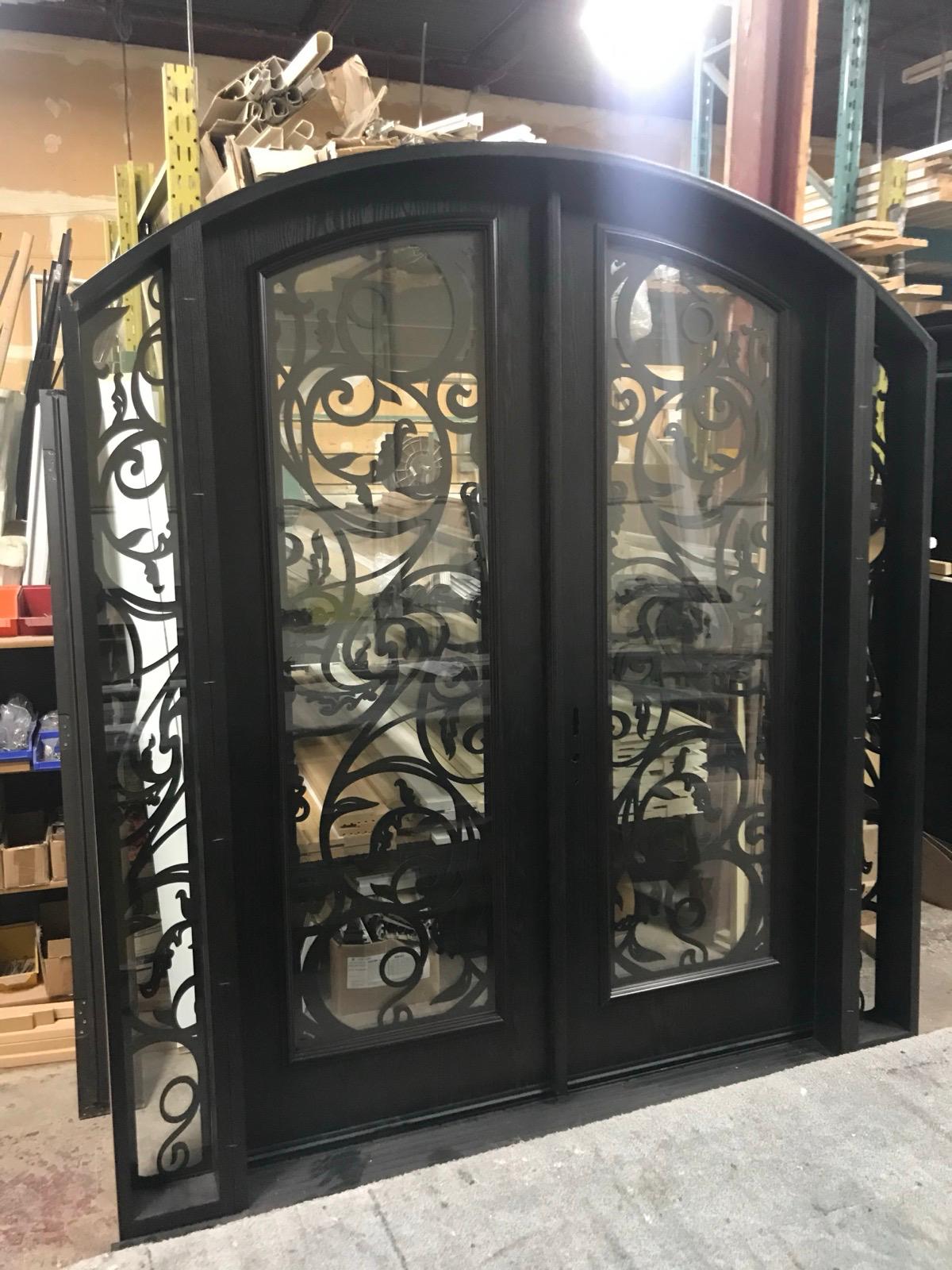
A wrought iron double door with arched transom in the shop, before installation.
Why do iron doors get condensation or frost on the inside?
Iron doors get condensation when the inside surface drops below the dew point of your indoor air. Warm, humid air touches cold metal or glass, and the moisture turns to water — or frost, if the surface is below freezing.
Two things control it: how cold the inside surface gets, and how much moisture is in the air. A thermal break — an insulating barrier between the exterior and interior metal — keeps the inside surface warmer. Even thermal break manufacturers are upfront that some condensation can still appear when the indoor-outdoor gap is extreme.
The part you control is humidity. Humidifier maker Aprilaire publishes these maximum indoor humidity levels to avoid condensation on windows and doors:
Outdoor temperature | Maximum indoor relative humidity |
|---|---|
-7°C (20°F) | 35% |
-12°C (10°F) | 30% |
-18°C (0°F) | 25% |
-23°C (-10°F) | 20% |
-29°C (-20°F) | 15% |
If your door fogs every cold morning, check the humidifier setting before you blame the door. Health Canada suggests keeping winter humidity at 30% or higher for comfort, so on the coldest days you're balancing the two. Natural Resources Canada's Keeping the Heat In guide covers door and window condensation in more depth.
Do wrought iron doors rust in Ontario?
Exposed wrought iron will rust in Ontario if its finish is chipped, because road salt, meltwater and freeze-thaw all attack bare metal. Rust almost always starts in the same three places: scratches from shovels or deliveries, the bottom rail and sill where slush sits, and welded joints.
Iron that sits inside sealed glass is protected from all of that. For exposed iron, a yearly check keeps it looking new:
Rinse salt splash off the lower door in spring.
Look for chips, bubbling paint or orange spots along the bottom and joints.
Lightly sand any rust spot, prime, and touch up with the matching finish.
Check weatherstripping and the door sweep for tears.
Keep snow and ice clear of the sill so meltwater can't pool.
What should you check before buying a wrought iron door for a cold climate?
Before you buy a wrought iron door in Canada, ask how the door stops cold, not how the iron looks. A beautiful door that frosts over every January won't feel beautiful for long.
Core or thermal break: Is the slab insulated fiberglass or steel, or is the frame thermally broken? Ask to see a cross-section.
Glass: Insulated double or triple glazing, ideally low-E with argon fill. Single glass behind iron is a warm-climate product.
Seals: Continuous compression weatherstripping and an adjustable sill and sweep.
Finish: Powder coat or a factory finish, with touch-up paint supplied.
Installation: Who installs it, and how the frame is insulated and sealed to the opening.
Warranty: Door Gallery installs with our own crew and backs every door with a 15-year warranty.
Many imported iron doors are designed for Texas or California. They look identical online. Ask where the door was designed to live.
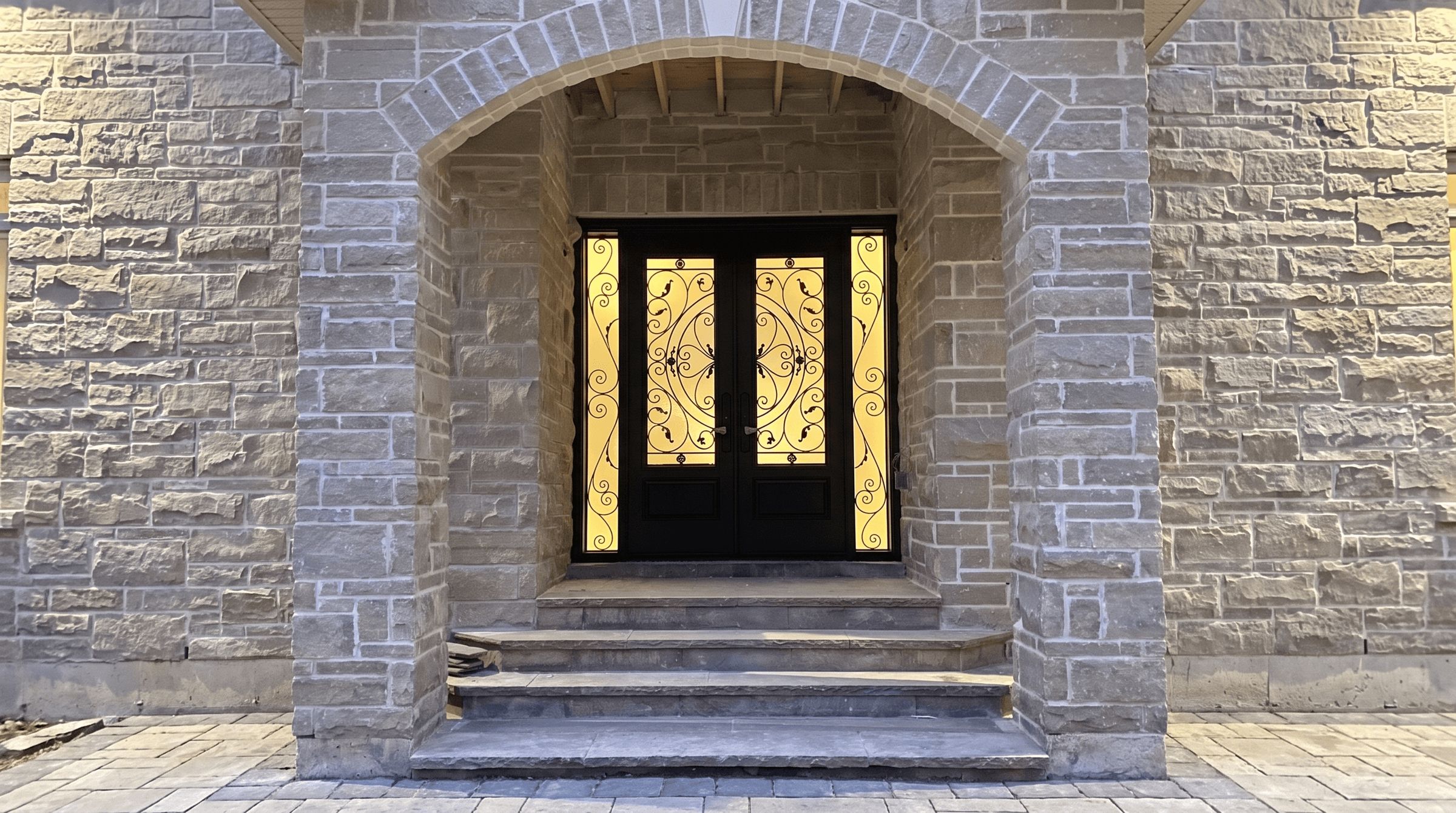
Iron scrollwork sealed within insulated glass on a fiberglass door system, installed under a stone arch.
How much does a wrought iron door cost in Ontario?
A wrought iron front door typically costs more than a plain fiberglass or steel door because of the handcrafted ironwork, custom glass and, often, larger double or arched openings. Door Gallery custom doors start from $3,000 installed, and wrought iron designs are quoted after a free in-home consultation.
For typical Ontario price ranges by material and configuration, see how much a front door costs in Ontario. Production takes 4–6 weeks, so if you want it before the snow, time your order accordingly.
Browse finished iron entries in the gallery, check unfamiliar terms like "transom" or "thermal break" in our door glossary, or book a consultation to pick scrollwork and finishes in person.
Frequently Asked Questions
Do wrought iron doors let in cold air?
A well-built, well-installed wrought iron door shouldn't let in cold air. Drafts come from worn weatherstripping, a poorly adjusted sill or gaps around the frame, not from the iron. Iron can feel cold to the touch if it isn't insulated, which is why insulated fiberglass systems or thermal breaks matter in Ontario.
How do I stop condensation on my iron front door?
Lower indoor humidity on cold days — about 30% at -12°C and 25% at -18°C — and keep air moving near the door. Run bathroom and kitchen fans, and don't block the entry with heavy curtains. If condensation is constant, the door may lack a thermal break or insulated glass.
Are wrought iron doors energy efficient?
They can be. Energy efficiency depends on the door's core, glass and seals, not the decorative iron. Iron fitted to an insulated fiberglass system with double or triple glazing performs like a quality fiberglass door. A single-skin iron door with single glass performs poorly in a Canadian winter.
Do wrought iron doors need a lot of maintenance?
Iron sealed within glass needs almost none — just clean the glass and check the weatherstripping. Exposed iron needs a yearly look for chips or rust, especially near the sill where salt and slush collect. Sand, prime and touch up any spot quickly and the finish will last for years.
Are wrought iron doors secure?
Yes. Wrought iron doors are among the most secure entry options, especially with a reinforced frame and multi-point lock. On fiberglass door systems, the iron is sealed within tempered, insulated glass, so it adds strength and privacy. As with any door, the frame, strike plate and lock matter as much as the slab.
Can you get a wrought iron look without a full iron door?
Yes, and in Ontario it's often the better choice. Wrought iron glass inserts fitted to a fiberglass door system give you hand-forged scrollwork with the insulation, low maintenance and condensation resistance of fiberglass. It's how Door Gallery builds its wrought iron doors in Concord.

1